
By: Charlotte Ng, Chief Product Officer
Published November 4, 2026 | Estimated read time: 2 min
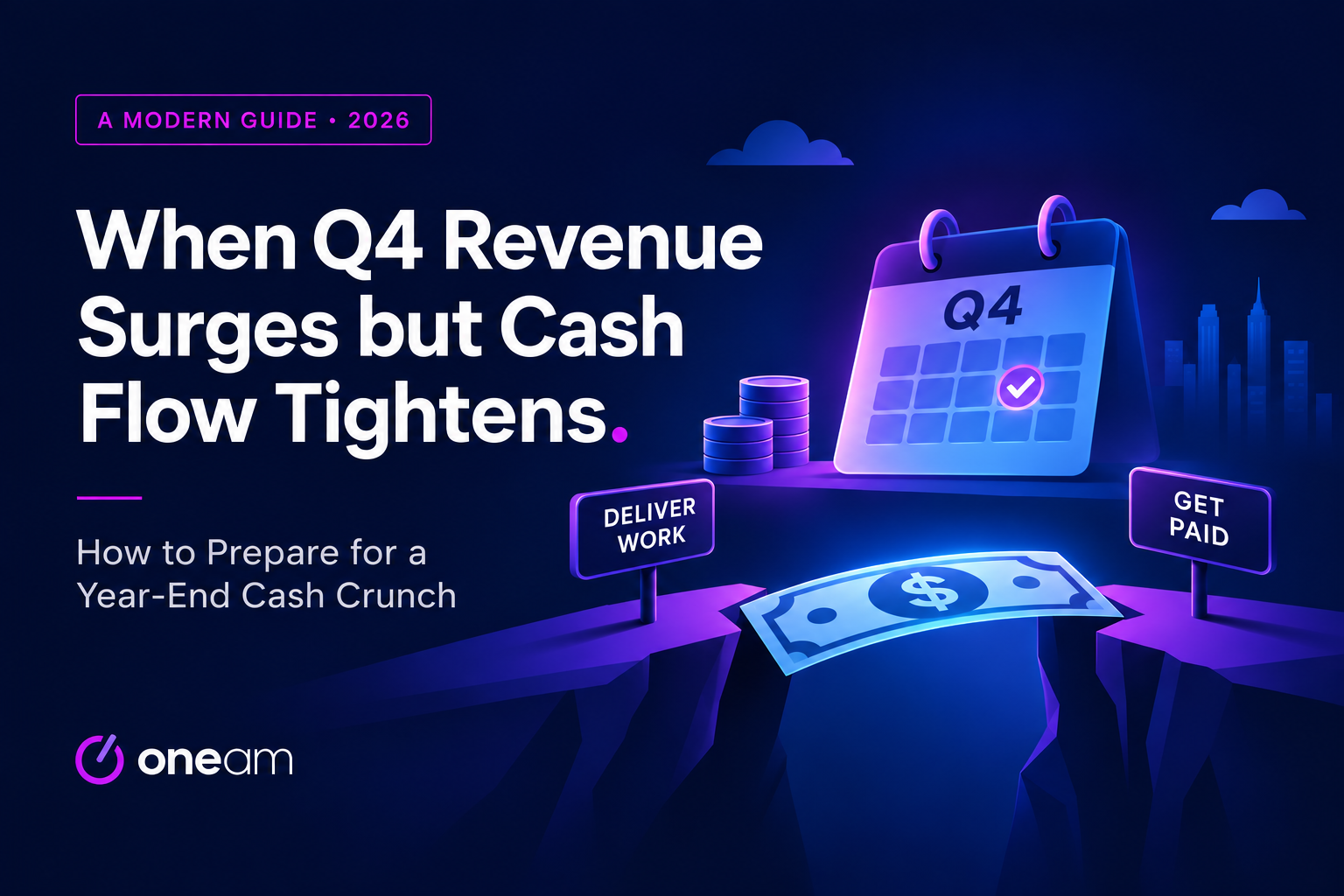
For many growing businesses, Q4 can be one of the strongest quarters for revenue and one of the most challenging for cash flow. Customer demand surges, project delivery accelerates, and operating expenses spike. But payments from enterprise customers may not arrive until weeks or months after the work is completed or the goods are delivered.
For business owners and finance leaders across services, media production, technology, or physical goods, that creates a familiar challenge: how do you fund today's growth when the revenue you've earned hasn't yet reached your bank account?
The Q4 Spending Rush: “Use it or Lose it” Budgets
Large corporations frequently operate on strict annual department budget allocations. At the operational level, department heads and business teams face a dilemma—commit their remaining budget by year-end, or risk seeing it cut in the next fiscal year. To avoid losing allocations, corporate business teams often accelerate vendor engagements, marketing campaigns, and technical implementations in the fourth quarter.
At the same time, consumer-facing brands and suppliers must rapidly increase operational staffing and fulfill higher seasonal demand. Across verticals, this creates an urgent need for working capital. The catch is that executing on this surge requires immediate, upfront cash.
Operating Costs Arrive Before Customer Payments
For businesses experiencing increased year-end demand, the cost of delivery often comes before the payment. Payroll, contractor fees, inventory purchases, and vendor obligations continue on their regular schedules, even when enterprise customers operate on net 30, net 60, or net 90 payment terms.
The result is a cash-flow gap: a business can be profitable and growing while still facing pressure to cover its immediate operating expenses.
Enterprises Managing their Days Payable Outstanding (DPO)
The real challenge occurs when it’s time to get paid.
While enterprise project teams are eager to consume services in Q4, finance departments are playing an entirely different game. As year-end approaches, CFOs, especially at publicly traded companies, face intense investor pressure to optimize their balance sheets and maximize reported free cash flow.
In a macro environment marked by economic uncertainty, elevated interest rates, and heavy capital investments such as AI infrastructure, one of the easiest levers for an enterprise to conserve cash is extending Days Payables Outstanding (DPO).
Finance teams execute this through several common year-end tactics. Corporate A/P departments frequently implement year-end payment freezes in mid-December, pushing scheduled ACH runs into January. More typically, our clients see enterprise customers stretch payment terms from net 30 or net 45 out to 60, 75, or even 90 days, or introduce extra administrative review layers before releasing funds.
Three Ways to Prepare Your Cash Flow for Year-End
Navigating the year-end crunch requires proactive liquidity management well before mid-December.
Lock down delivery approvals in November: Get written acceptance on deliverables and milestones before enterprise project managers leave for the holidays and corporate A/P systems freeze.
Plan for delayed payments: Identify which customers consistently stretch terms in December. Model your cash forecast assuming that any invoice scheduled for late December will not actually land until mid-January.
Decouple your growth from enterprise payment schedules: Rather than let your liquidity be at the mercy of your customers’ objectives, use receivables financing to convert invoices into immediate working capital. You can fund your bi-weekly payroll and operating expenses out of your earned revenue, while your enterprise customer pays on their normal schedule.
OneAM Early Pay: Keeping up with Q4 Surge
A busy Q4 should set your business up for a strong start to the new year, not leave you scrambling to meet payroll. With OneAM Early Pay, you can proactively shore up cash to handle surging customer demand, navigate delayed payment schedules, and meet your regular working capital needs.
Enterprise customers will always manage their cash flow to suit their own needs. The businesses that thrive through year-end are the ones that recognize this dynamic early, plan their cash cushion ahead of time, and ensure they have flexible working capital in place to bridge the gap.