
Navigating the Small Business Credit Gap: What the Fed’s Latest Data Tells Us
By: Charlotte Ng, Chief Product Officer
Published August 19, 2026 | Estimated read time: 2 min
Earlier this year, the Federal Reserve published findings from its annual Small Business Credit Survey (SBCS). Conducted by the 12 Federal Reserve Banks, the survey offers a national look at the financial health, financing needs, and credit experiences of small businesses.
While the data shows resilience across 6,000+ surveyed businesses, it also reveals continued financial pressure. Business owners are bracing for a tougher economic environment, with expectations for future revenue and employment growth declining year over year.
For B2B businesses, the findings point to a particularly important challenge: managing the gap between earning revenue and actually getting paid. Here are some of the most relevant findings and what they mean for businesses looking for more flexible ways to manage working capital.
Financial Conditions Remain Challenging
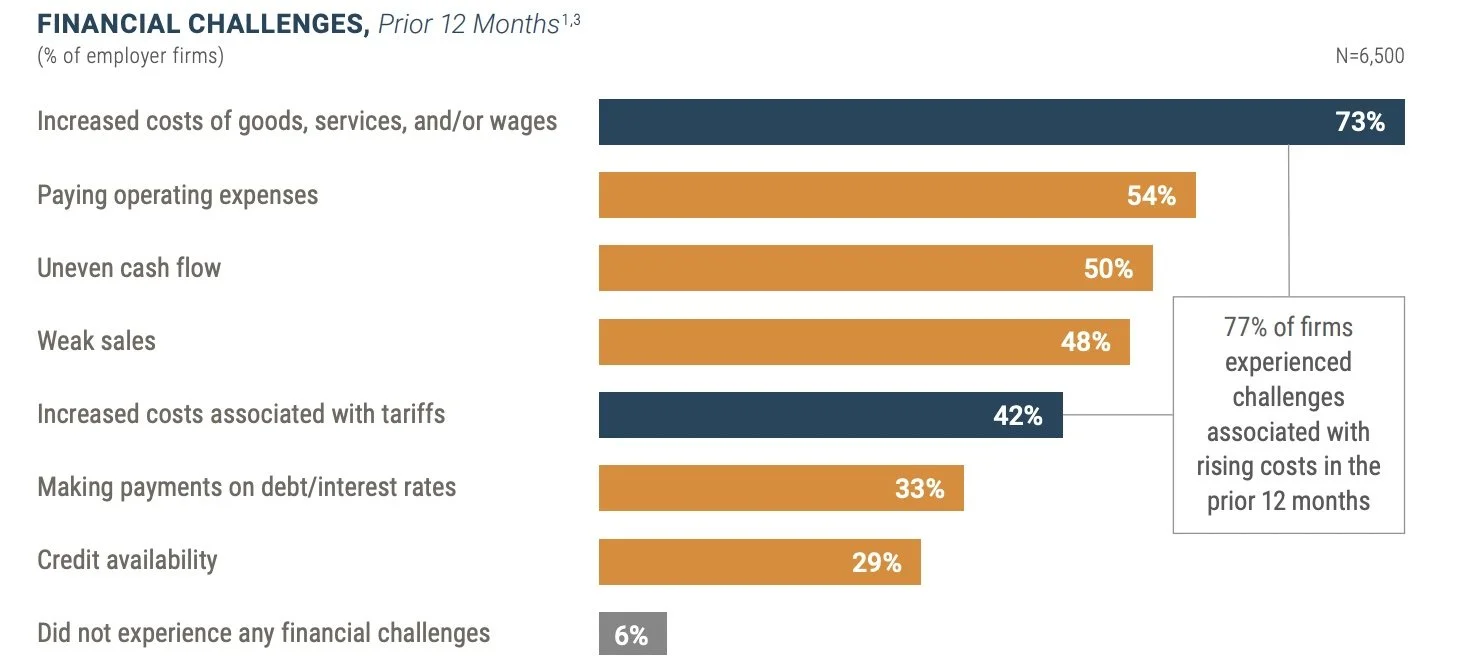
Small businesses continue to feel the squeeze. According to the Fed, 73% of firms reported increased costs of goods, services, and/or wages as a financial challenge, while 50% reported uneven cash flow. For B2B businesses, cash flow challenges can be compounded by the time between completing work, issuing an invoice, and actually receiving payment. Long payment terms can leave businesses waiting 30, 60, or even 90 days for revenue they’ve already earned—all while everyday operating expenses like payroll and rent continue.
Source: Federal Reserve, Small Business Credit Survey
Because of this, businesses aren’t just borrowing to expand; they’re borrowing to keep the lights on. According to the Fed, 56% of businesses that sought financing did so simply to meet operating expenses.
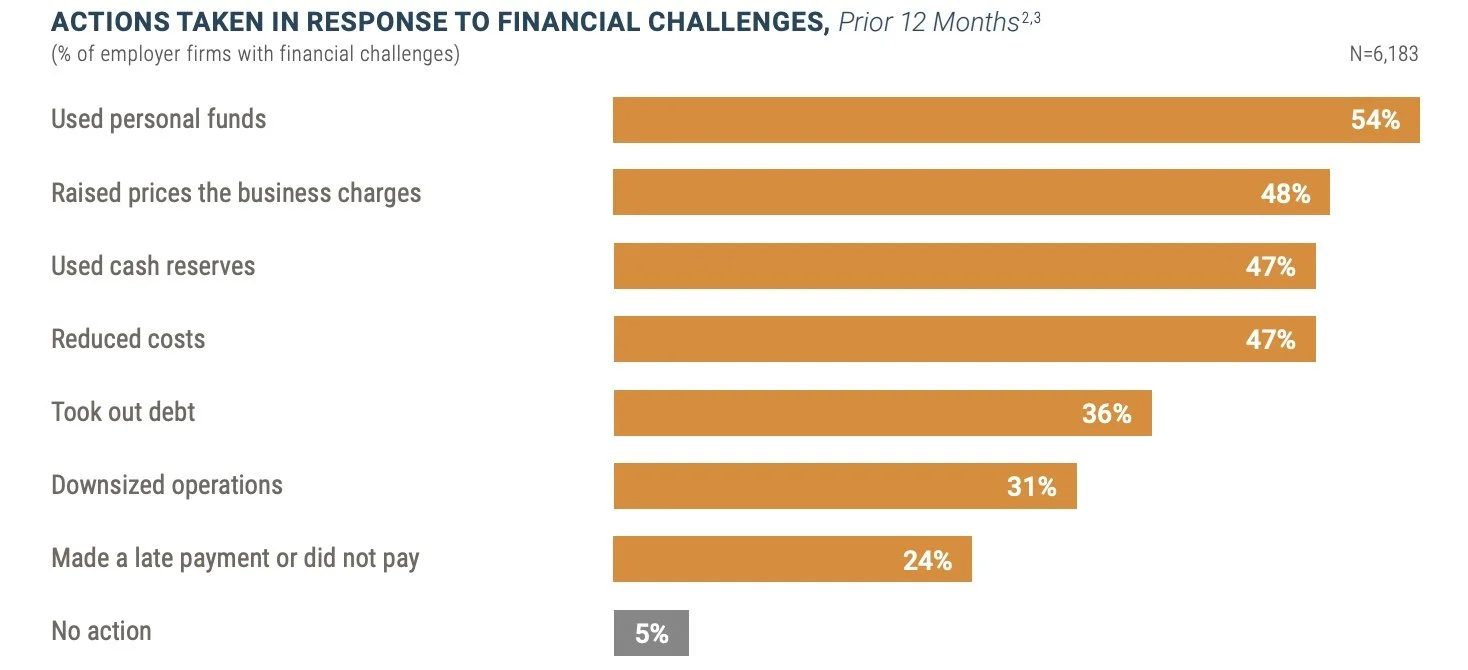
To stay afloat, over half of small business owners used personal funds. Others dipped into their available cash reserves, and over a third took out debt.
Source: Federal Reserve, Small Business Credit Survey
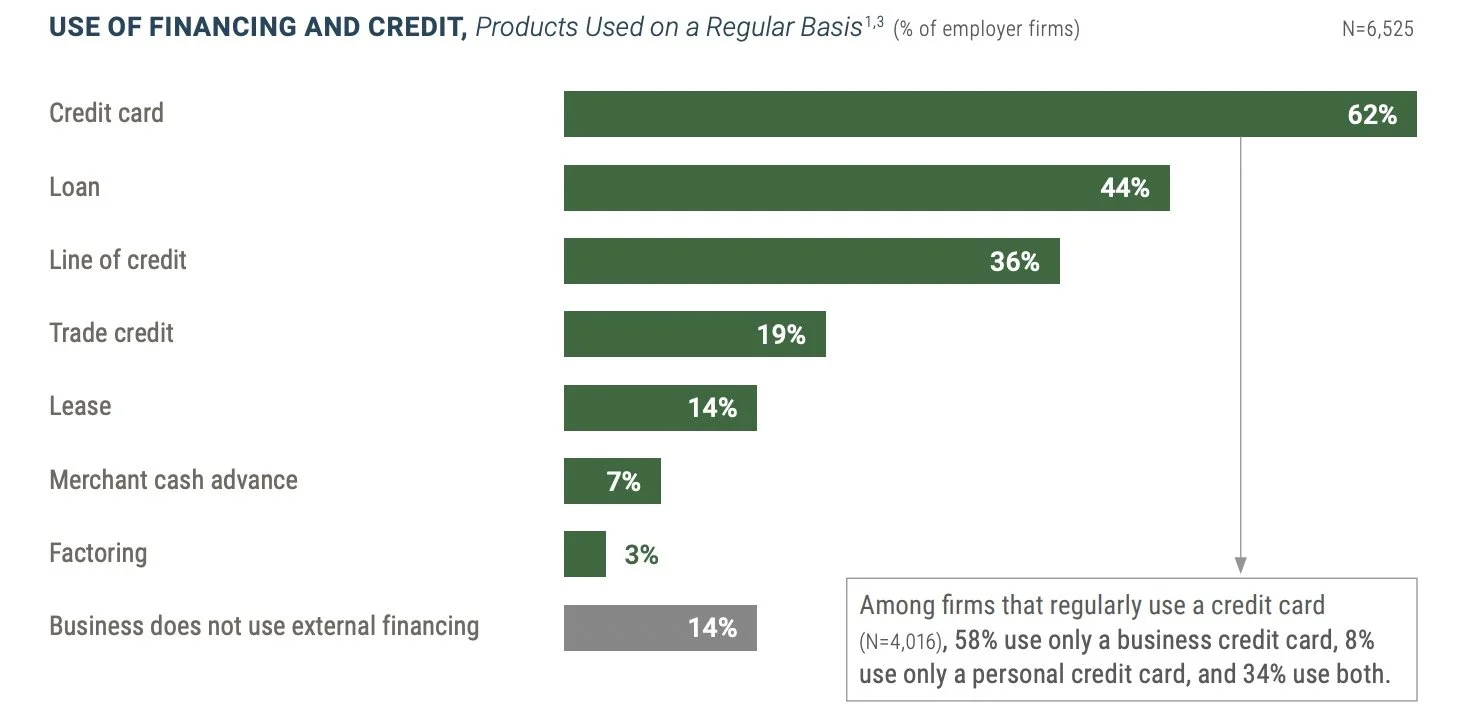
For those that take out financing, most resort to traditional debt products—credit cards, loans, or lines of credit—to finance their businesses, while a smaller percentage of businesses use non-debt options such as trade credit (net terms on their payables) and factoring (a form of receivables financing).
Source: Federal Reserve, Small Business Credit Survey
The Tradeoffs of Traditional Debt
For traditional debt, the hidden costs are often more than just interest rates. The survey found that:
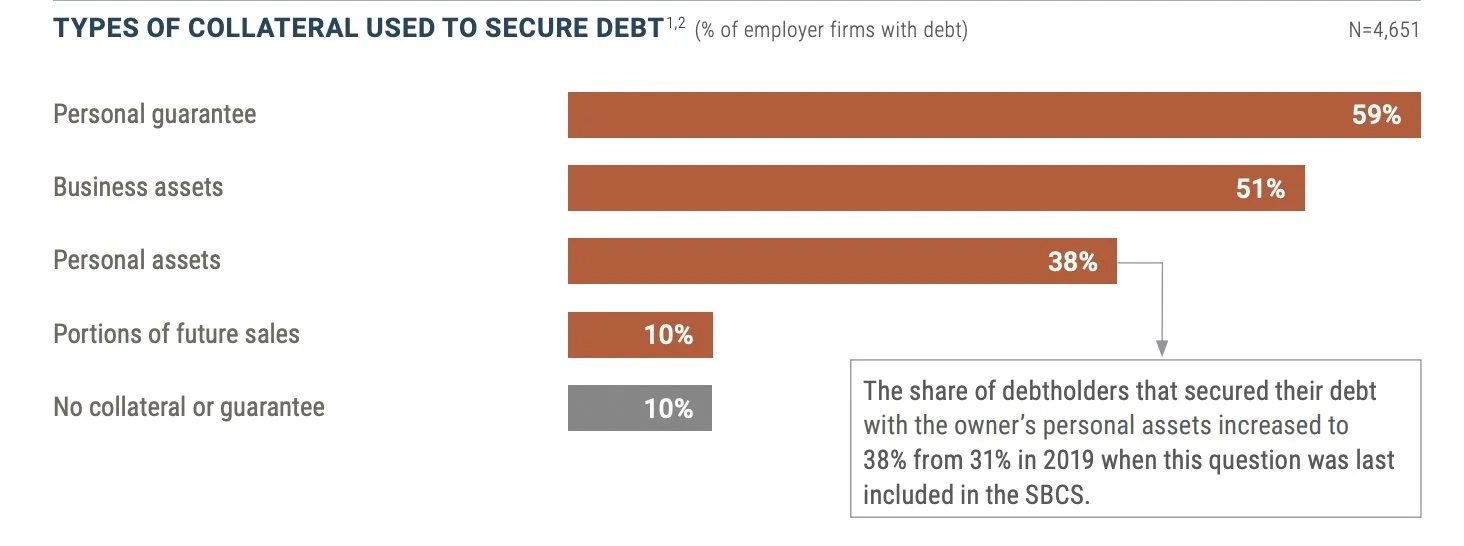
Personal risk is the norm: 59% of small businesses had to secure debt with a personal guarantee, and 38% had to pledge personal assets. This means if the business misses a payment, the owner’s home, savings, or car could be at risk.
Source: Federal Reserve, Small Business Credit Survey
There’s a clear funding gap: Over half of businesses that applied for new financing did not receive the full amount they requested, with 67% citing a lack of lender approval as the primary reason.

Source: Federal Reserve, Small Business Credit Survey
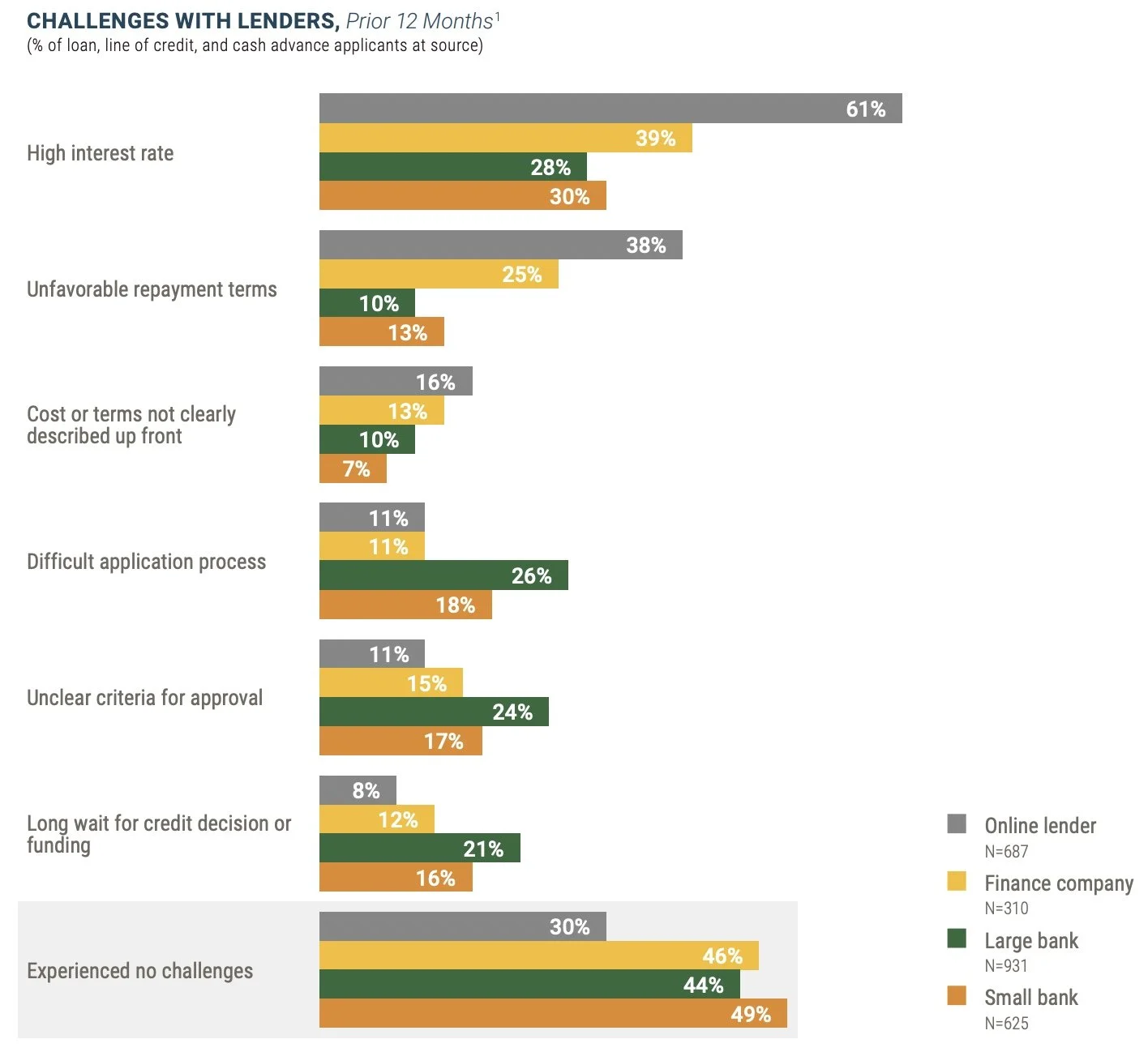
Many expressed frustrations with their lenders: Businesses reported challenges of high interest rates particularly with online lenders, unfavorable repayment terms, difficult application processes, and long wait times for credit decisions and funding.
Source: Federal Reserve, Small Business Credit Survey
A New Path Forward: OneAM Early Pay™
Despite these drawbacks, most small businesses still resort to traditional credit cards or loans products. Only 3% of businesses currently utilize a form of receivables financing (factoring), meaning many are missing out on a way to access cash without taking on debt.
OneAM Early Pay offers a fast, transparent, non-debt alternative for B2B businesses serving enterprise customers with long payment terms. Instead of leaving cash locked up for 30, 60, or 90+ days, risking personal assets on a loan, or paying hidden fees to a lender, businesses can get paid on their invoices immediately.
With OneAM Early Pay, you retain control over:
Your cash flow: Choose when to get paid and how much
Your customer relationships: Maintain your hard-won enterprise customer relationships without third-party intrusion
Your financing costs: Opt into a transparent fee structure with no late fees or hidden charges
The Federal Reserve data paints a clear picture: accessing working capital remains a challenge for small businesses. But for B2B businesses with outstanding receivables, taking on more debt doesn’t have to be the only option.
OneAM Early Pay is designed to solve the funding gap by turning your outstanding B2B invoices into immediate working capital. By choosing a solution that prioritizes speed and transparency over debt and personal guarantees, you can stop worrying about the gap in your cash flow and start focusing on your next phase of growth.
Ready to take control of your cash flow? Learn how OneAM Early Pay can help your business thrive today.