
By: Ksusha McCormick, Chief Executive Officer
Published November 9, 2026 | Estimated read time: 2 min
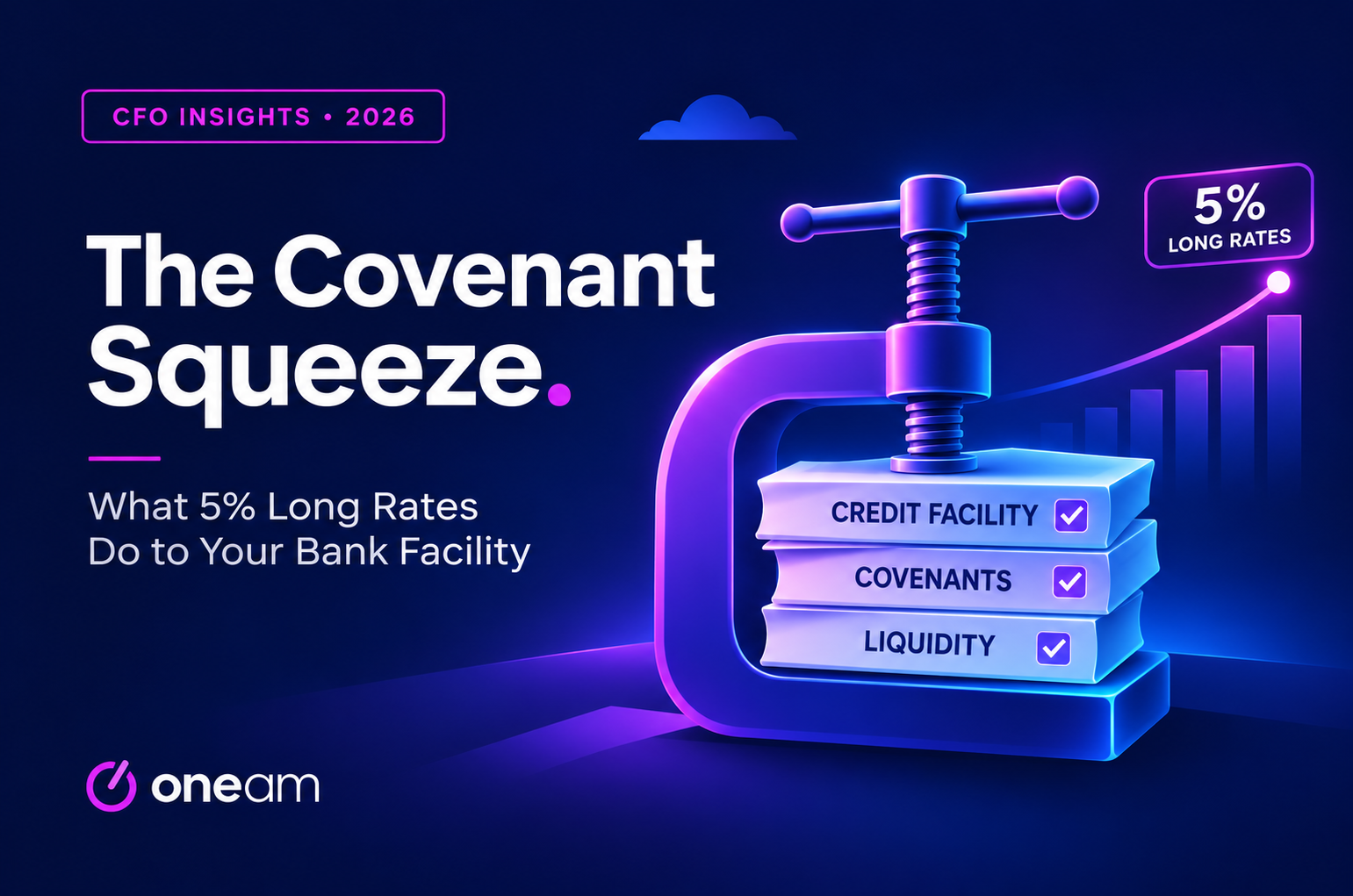
When CFOs model the impact of higher rates, the first question is usually the obvious one: what does this do to our cost of capital? It's a reasonable place to start. It may not be the question that matters most.
The 10-year Treasury yield is now near 5%. On September 16, after two years of gradually lowering rates, the Fed raised the target rate by 25bps. The forces behind these moves, a tight labor market and stubbornly high oil prices, show few signs of letting up. Finance teams should plan for rates to stay elevated rather than wait for relief.
The obvious costs, and the one that isn't
For small and midsize businesses, some of the damage is easy to see. Input costs climb. End customers under their own financial pressure buy less or pay slower. And for any company running on floating rate debt, the extra cost of capital shows up directly in the interest expense.
The less visible risk sits in the financial ratios underpinning existing bank facilities. Higher debt cost compresses coverage ratios. Thinner margins strain leverage tests. Slower collections eat into free cash flow. Rate rises can restrict access to capital through covenant math well before they show up in the quoted price of credit.
A revolving line can look perfectly adequate on paper while shrinking profitability quietly changes how much of it the company can actually use. The facility still exists. The liquidity the CFO thought it represented may not.
Fixed thresholds, floating everything else
Covenants are the conditions in a lending agreement that a borrower must keep meeting to maintain its funding: minimum debt service coverage, maximum leverage, fixed charge coverage, and similar tests. The rate on a floating facility moves with the market. The covenant thresholds usually don't.
The ratios required by the lender may stay the same. In reality, the goalposts are moving. A fundamentally sound business can drift toward a covenant breach without any single bad decision. Once it gets there, the lender can freeze further draws, shrink the facility, require more collateral, reprice, or, in serious cases, demand repayment. Expensive capital is a problem. Capital that disappears just when the business needs it is a much bigger one.
Build liquidity before you need it
The worst time to look for alternative capital is after the financial profile has already slipped. The same conditions pushing a company toward its covenants make a bank less willing to extend more credit.
This is where the structure of the financing matters. A bank facility is underwritten against the company itself, with covenants tied to its EBITDA, leverage, and coverage. Receivables finance works differently. In a true sale structure, the company isn't borrowing against its own credit. It converts an asset it already holds, its receivables, into cash. If the company’s customers are large enterprises, selling receivables effectively allows the small business to piggyback on their superior creditworthiness. There's no coverage test that makes a valid invoice ineligible after a soft quarter.
This aspect makes receivables finance particularly useful for smaller businesses that are healthy but not yet on firm financial footing, or whose ratios are under temporary strain. Some newer platforms also price dynamically based on transaction history, so a company's cost of funds can actually fall even during periods when the broader cost of capital is rising.
Diversifying sources of funding is crucial for surviving credit cycles and other market storms. That's where solutions like OneAM Early Pay come in. By allowing businesses to convert eligible outstanding invoices into cash, OneAM offers an additional source of liquidity that doesn't depend on the same EBITDA or leverage covenants as traditional bank facilities. For CFOs, it's another way to build financial flexibility before liquidity becomes a constraint.